In today’s world, uncertainty feels like the only constant. Across the globe, tensions are rising:
- The ongoing rivalry between the US and China.
- The BRICS alliance positioning itself against the US-led system.
- The India-Pakistan conflict simmering in South Asia.
- The prolonged Russia-Ukraine war reshaping Eastern Europe.
- And most recently, the US strikes on Iran, prompting retaliation threats to close the Strait of Hormuz.
Now, why does this matter to us as investors? Because the Strait of Hormuz is no ordinary waterway. Roughly 20% of the world’s oil supply passes through it. If Iran were to fully close it, global oil prices could surge overnight, driving inflation higher and pushing economies toward recession.
And on top of this, former President Donald Trump continues to raise the prospect of tariffs, which could further disrupt global trade.
The truth is simple: we can’t control these geopolitical events. But we can control how prepared we are.
As the great Sir John Templeton once said:
“For those who are properly prepared, the bear market is not only a calamity, but an opportunity.”
- Know what to do
- Know when to do it
- Know how to do it
Or as Jack Ma once wisely put it: “You always repair the roof when it’s sunny, not when it’s stormy.”
Let me share a recent example from my own portfolio.
Back in July, I converted a substantial amount of Singapore dollars into US dollars. Why? Because I noticed a sharp change in exchange rates.
- At one point, 1 SGD only converted to 0.6899 USD.
- But by July 22, 1 SGD converted to 0.7856 USD.
That’s a 13.9% increase in USD purchasing power—without doing anything other than being prepared.
In fact, I transferred SGD 160,000 into my Interactive Brokers account (one of several accounts I manage), where my total portfolio size is around SGD 1.3 million.
So the question is: once the money is in USD, where should it go?
One of the core investments I look at is the VOO ETF, which tracks the S&P 500 index.
Here's why:
- Over the long term, the S&P 500 has only one trend: upward.
- With dividends reinvested, the average annual return is about 10.4%.
- Out of the past 94 years of market history, only 21% were bear markets.
That means if you have the discipline to ride out short-term volatility, history is on your side. The bull markets far outweigh the bear markets.
And this is exactly why trouble often becomes opportunity for the prepared investor.
The world today feels uncertain. Wars, trade tensions, and inflation risks can shake markets. But if you know what to do, when to do it, and how to do it, you can turn these challenges into opportunities.
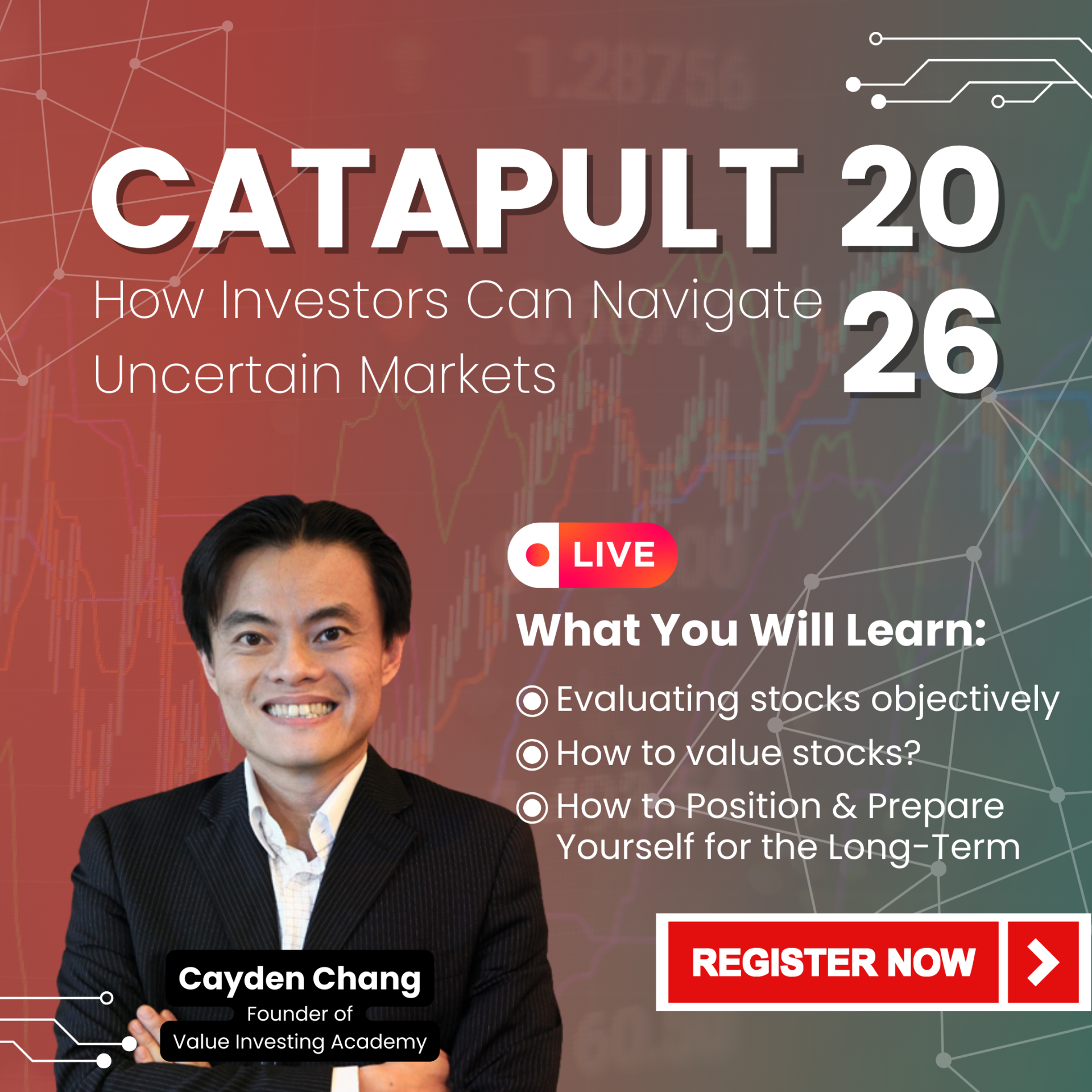
That’s why I invite you to join my free upcoming webinar. Scroll down to register